




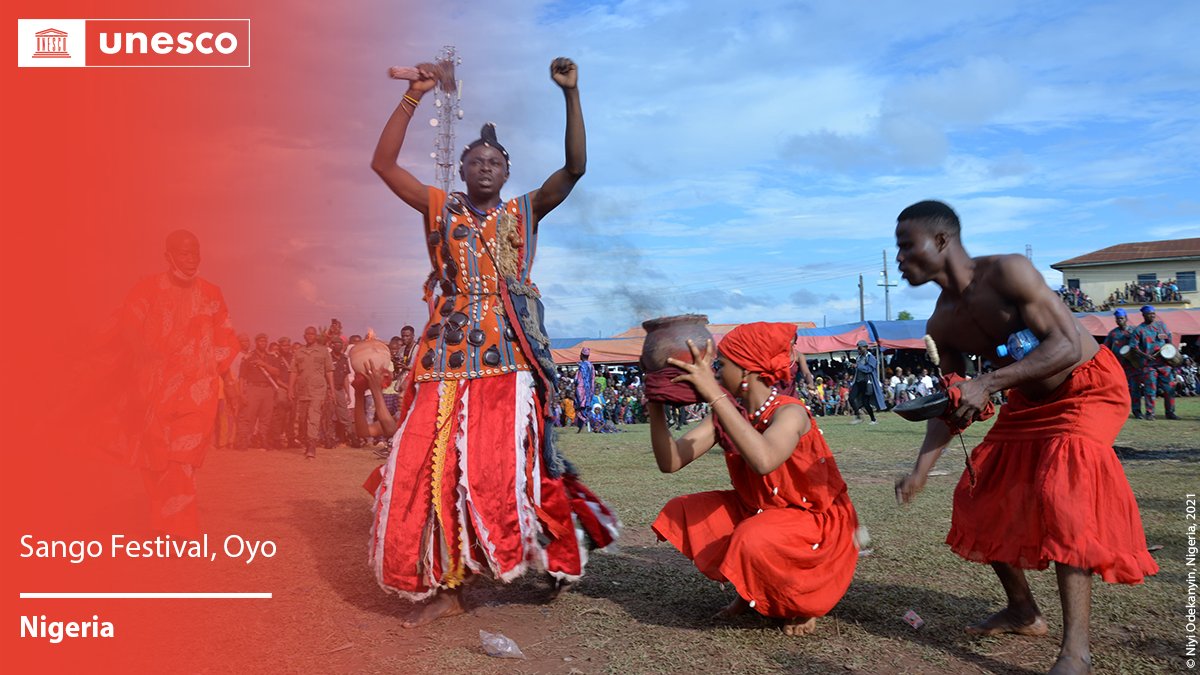

Excitement reverberates through Oyo as UNESCO officially ratifies the inclusion of the Sango Festival on its prestigious Intangible Heritage List. This new inscription celebrates the cultural richness and historical significance of the Sango Festival, a traditional event deeply rooted in the heritage of Oyo, Nigeria.
Who is Sango?
Sango, the third Alaafin-king of the old Oyo Empire, ascended to the throne after his brother Ajaka. Known as the God of thunder, Sango’s reign was marked by battles with other towns. An intriguing twist in his story saw him mistakenly destroy his palace with lightning, leading to the end of his rule.
Significance of the Sango Festival to the Yorubas:
Sango, a prominent Orisa in Yorubaland, plays a vital role in the cultural and traditional fabric of the Yoruba people. The festival serves as a day of reconnection for the Yorubas, showcasing their rich cultural heritage through activities such as drumming, dancing, and singing.
Brief History of Sango Festival:
Dating back over 1000 years, the Sango Festival originated when Sango mysteriously disappeared from the palace, believed to have committed suicide after a confrontation with a powerful chief. Since then, the festival has been an integral part of Oyo’s cultural identity.
International Recognition:
In 2013, the Oyo State Government elevated the festival to the global stage, renaming it the World Sango Festival. This move has now culminated in UNESCO’s recognition, solidifying the festival’s place among the world’s intangible cultural heritage.
How Sango Festival is Celebrated:
The 10-day event is marked by pomp and pageantry, with worshippers and visitors adorned in white or red attire. The first day kicks off with various games, including the Ayo competition—a traditional Yoruba board game symbolizing spiritual connection.
Celebration Highlights:
• Ogun Ajobo Day (Day Two): Traditional groups from the Oyo zone display vibrant performances, culminating in the Aisun Koso night party.
• Sango Obakoso Day (Day Three): Cultural groups, including Igunu and Omolulu, showcase their performances.
• Sango Koso Shrine Day (Day Four): The shrine is opened, accompanied by celebrations, performances by the Association of Nigeria Theatre Arts Practitioners (ANTP), and a night party for Oya Okenira.
The ratification by UNESCO marks a momentous occasion, highlighting the cultural diversity and heritage preservation efforts of Oyo State.
About Sango Festival
The Sango Festival, deeply rooted in the history of Oyo, Nigeria, is a celebration of cultural heritage, spirituality, and traditional significance. Recognized by UNESCO, it stands as a testament to the enduring legacy of Sango and the rich cultural tapestry of the Yoruba people.